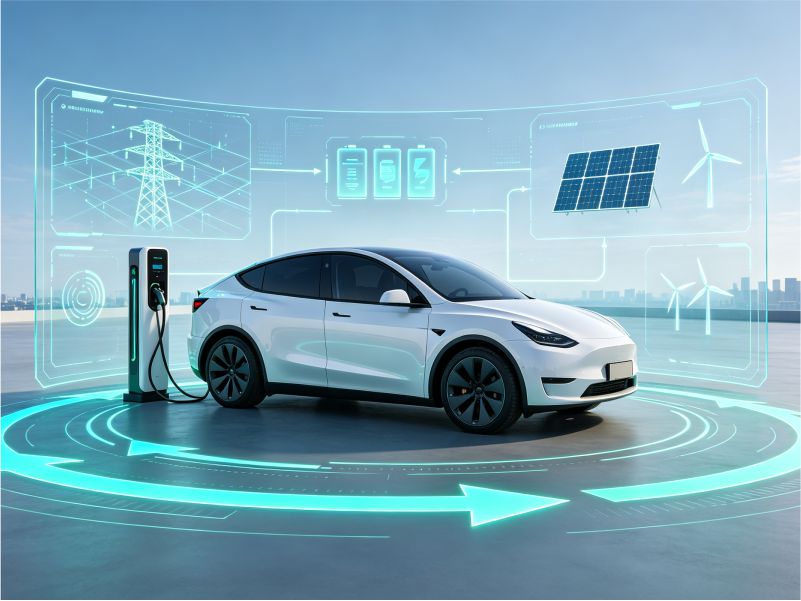
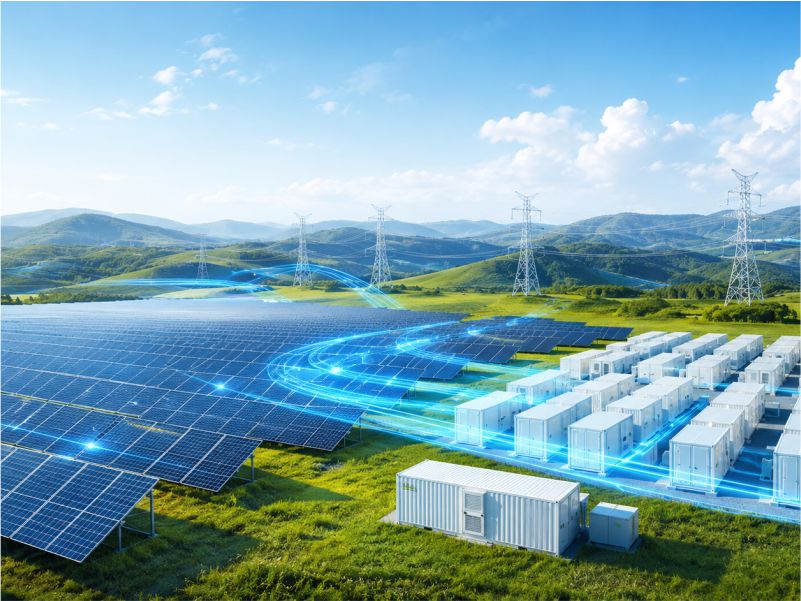
On August 3, the National Development and Reform Commission (NDRC) and the National Energy Administration (NEA) jointly issued the 15th Five-Year Plan for Building a New-Type Power System (NDRC Energy [2026] No. 942). The Plan sets the strategic goal of basically establishing a new-type power system by 2030.
Click “Read Original” at the end of the article to access the full text of the Plan.
The Plan sets out 16 quantitative indicators. Several are directly relevant to the power distribution sector:
Source: 15th Five-Year Plan for Building a New-Type Power System
•Distribution grid hosting capacity for distributed renewable energy: from 500 GW to 900 GW
•Maximum regulation capacity of virtual power plants: over 50 GW
•Installed capacity of new-type energy storage: from 136 GW to 300 GW
•Charging infrastructure: from 20.09 million units to more than 40 million
•Share of electricity in final energy consumption: from 30% to 35%
The Plan explicitly calls for, during the 15th Five-Year Plan period, building a new grid architecture with coordinated main grids, distribution grids, and microgrids, while transforming distribution grids into platforms for the efficient allocation of generation-grid-load-storage resources. In his interpretation of the Plan, Shu Yinbiao, an academician of the Chinese Academy of Engineering, further emphasized the need to fully leverage the distribution grid as a new type of public platform.
For the distribution sector, the Plan sends several clear signals.
I. Distribution Grid Hosting Capacity Is Nearly Doubling—Grid-Edge Sensing and Control Are the Prerequisite
The distribution grid’s hosting capacity for distributed renewable energy will rise from 500 GW to 900 GW, nearly doubling. Distributed PV, commercial and industrial energy storage, and EV chargers will connect to distribution networks at much greater scale. The Plan explicitly calls for “enhancing the distribution grid’s overall hosting capacity and regulation capability to support the connection and safe, stable operation of 900 GW of distributed renewable energy.”
As hosting capacity nearly doubles, the distribution grid must first be able to “see” and then be able to “adjust.” Every transformer, branch feeder, and grid-connection point needs to be observable, measurable, adjustable, and controllable.
Achieving this at the low-voltage distribution level requires end-to-end sensing from incoming feeders and outgoing feeders to distribution boxes and final circuits. Real-time operating data such as voltage, current, and temperature must be collected and aggregated by intelligent distribution terminals for upstream transmission, forming a closed loop of “sensing → communication → platform → control.” This is a core component of distribution-grid digitalization.
II. Distributed PV Is Moving from “Basic Grid Connection” to “Fine-Grained Management”
The Plan calls for the high-level integration of more than 2.8 TW of new-energy capacity. The large-scale connection of distributed PV creates systematic requirements for grid-connection management, operational monitoring, and regulation and control.
The industry has already developed a complete technical pathway from field-device connectivity and local data aggregation to centralized platform management. By integrating inverters, energy meters, grid-connection switches, and monitoring devices under a unified framework, systems can perform data acquisition, protocol conversion, data aggregation, and control-command delivery—supporting the shift of distributed PV from basic grid connection to fine-grained management.
III. Large-Scale Virtual Power Plant Operation Depends on Grid-Edge Nodes Being “Observable and Controllable”
The Plan calls for “strongly promoting the development of virtual power plants” and enabling VPPs to participate in electricity market transactions on a regular and large-scale basis. The target for maximum VPP regulation capacity exceeds 50 GW.
Large-scale VPP operation depends on the ability to observe and control vast numbers of grid-edge nodes. Distributed PV, energy storage, EV chargers, and other decentralized resources can only be dispatched in a coordinated manner if every node can be monitored in real time and controlled precisely. This is one of the most direct real-world applications of intelligent power distribution.
IV. Energy Storage Capacity Is Set to Double, Making Distribution-Side Integration Critical
The Plan calls for around 160 GW of additional new-type energy storage to be added nationwide during the 15th Five-Year Plan period, bringing total installed capacity to 300 GW by 2030. Energy storage is moving from a supplementary role to a core system regulation resource.
As the storage target doubles, large volumes of energy storage systems will connect at the distribution level, creating new requirements for grid interconnection, charge/discharge management, operational monitoring, and fault protection.
V. Power–Computing Coordination Enters the Plan, Driving New Data Center Distribution Demand
For the first time, the Plan lists “promoting coordinated development of electricity and computing power” as a core task in building the new-type power system. It calls for “coordinating energy-resource allocation with computing-infrastructure development; planning computing and power projects in an integrated manner; strengthening computing with electricity and advancing electricity with computing.” The China Electricity Council (CEC) estimates that during the 15th Five-Year Plan period, electricity consumption by computing infrastructure nationwide will increase by more than 100 TWh per year on average.
The high-density, high-reliability power distribution requirements of data centers place greater demands on precise monitoring and protection for low-voltage incoming feeders, outgoing feeders, and critical-load circuits.
Conclusion
With distribution-grid hosting capacity rising from 500 GW to 900 GW, and virtual power plants and new-type energy storage moving from supplementary resources toward core system roles, distribution-grid digitalization is one of the clearest directions of the 15th Five-Year Plan period. Distributed renewable integration, intelligent upgrades to low-voltage distribution areas, grid-edge sensing for VPPs, energy-storage interconnection management, and reliable power distribution for computing infrastructure all point to the same requirement: end-to-end sensing and control across low-voltage distribution networks.
The direction is now clear, and the digitalization of distribution grids is continuing to accelerate.
Data sources: 15th Five-Year Plan for Building a New-Type Power System and publicly available reports.